

AI Agents Revolutionize B2B Marketing: From Automation to Strategy
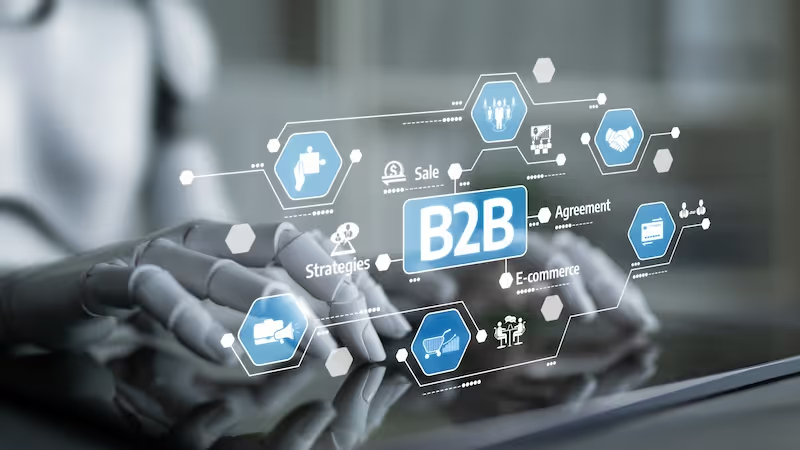

The artificial intelligence revolution reached a tipping point in 2025, with AI agents evolving from simple automation tools into sophisticated strategic partners that now architect and execute entire go-to-market campaigns. This transformation represents a fundamental shift in how B2B marketing teams operate and deliver measurable business impact.
AI agents—intelligent systems that understand and respond without human intervention—have moved beyond answering basic customer inquiries. Today's agents, built on platforms like Salesforce's Agentforce, handle complex workflows from campaign routing to performance optimization, acting as autonomous revenue engines rather than mere productivity tools.
The Performance Impact is Measurable
The adoption surge is driven by concrete results. According to the Slack Workforce Index, daily AI usage among desk workers jumped 233% in just six months, with AI-powered employees proving 64% more productive and 81% more satisfied than their non-AI counterparts.
External-facing results are equally impressive. Juniper Research forecasts that AI-automated customer interactions will explode from 3.3 billion in 2025 to over 34 billion by 2027, as platforms adopt the Model Context Protocol (MCP) standard that streamlines agent deployment across customer support, marketing, and sales functions.
Three Agent Types Leading the Revolution
Marketing operations expert Al Lalani from Omnibound AI identifies three specialized agent categories driving current success:
- The Listener Agent: Continuously monitors prospect calls to capture pain points, needs, and competitive mentions, providing 24/7 audience intelligence
- The Topic Agent: Transforms those insights into focused content themes for blogs, social posts, and sales battle cards
- The Creator Agents: Takes approved topics and instantly generates branded marketing assets aligned with actual prospect discussions
"B2B Marketing operations roles will evolve from 'managing tools' to 'designing agent workflows,'" notes Lalani. "The skill that matters won't be writing better prompts. It will be architecting systems where multiple specialized agents work together seamlessly."
From Cost Center to Revenue Driver
Companies like 6sense, Salesloft, Gong, and Xactly now deploy agents that directly connect marketing activities to sales outcomes, providing clear ROI demonstration through pipeline analysis, deal forecasting, and next-best-action recommendations.
Looking ahead to 2026, industry leaders predict the winners won't be organizations with the most AI tools, but those with the most intelligent implementation strategies. As Saul Marquez of Outcomes Rocket notes, "Only about a third of B2B organizations have implemented agentic AI at scale, yet those that have are already gaining an advantage: cleaner execution, more predictable contribution to revenue and better alignment across marketing and sales."
🔗 Read the full article on DemandGen Report
Stay in Rhythm
Subscribe for insights that resonate • from strategic leadership to AI-fueled growth. The kind of content that makes your work thrum.
More from Thrum
Additional pieces exploring adjacent ideas