

Why 1966 Headline Techniques Will Outperform AI in 2026

I keep coming back to Eugene Schwartz.
Not out of nostalgia. Not because I think old is automatically better. I come back because his headline techniques from 1966 still cut through modern noise better than most AI-generated hooks I see today.
And I think I know why.
The Psychology Hasn't Changed
Here's what people miss: the average person faces between 4,000 and 10,000 ads daily. Your brain developed filtering mechanisms that operate below conscious awareness. You have to. Otherwise you'd never get anything done.
Those filters haven't changed since 1966. They've just gotten faster.
Research shows your brain makes initial engagement decisions within 50 milliseconds. That's faster than conscious thought. Which means headlines must speak directly to automatic filtering systems before rational minds engage.
Schwartz understood this. AI templates don't.
The Data Backs This Up
Recent testing shows human-written Google ads generated 45.41% more impressions and achieved 4.98% CTR versus AI's 3.65% CTR. When humans edited AI copy, performance jumped to a 26% increase in click-through rates compared to purely AI-generated copy at 19%.
The pattern is clear. Understanding psychological triggers produces measurably superior outcomes.
Headlines do 80% of the work in advertising performance. Most organizations optimize the wrong 20%.
Five Techniques That Still Work
Let me break down why Schwartz's specific techniques remain lethal.
1. Measure the Claim
Don't promise improvement. Quantify it.
"20,000 filter traps" beats "better filtration" because numbers feel earned. Specificity signals credibility. It tells the reader you've done the work, you have the data, you're not making things up.
Using numbers in headlines can increase CTR by 200% and conversion rates by 25%. Title tags between 40 to 60 characters show an 8.9% better average click-through rate compared to those outside this range.
This isn't about gaming the system. It's about precision. Vague strategy fails. Explicit architecture succeeds.
2. State a Paradox
"How a bald-headed barber saved my hair."
Your brain can't ignore contradiction. It has to resolve the tension. So it clicks.
This technique works because it creates a gap between expectation and reality. That gap demands closure. The only way to close it is to read further.
Most AI templates avoid paradox. They optimize for clarity over curiosity. But curiosity is what stops the scroll.
3. Remove Limitations
"Shrinks hemorrhoids without surgery."
Every category has a dreaded tradeoff. Name it and remove it. Nothing accelerates desire like eliminating the part people fear most.
This technique requires domain knowledge. You need to understand what your audience actually worries about. Not what you think they worry about. What they actually lose sleep over.
AI can't do this well because it doesn't have lived experience in your specific context. It can guess based on patterns, but guessing isn't the same as knowing.
4. Turn It Into a Challenge
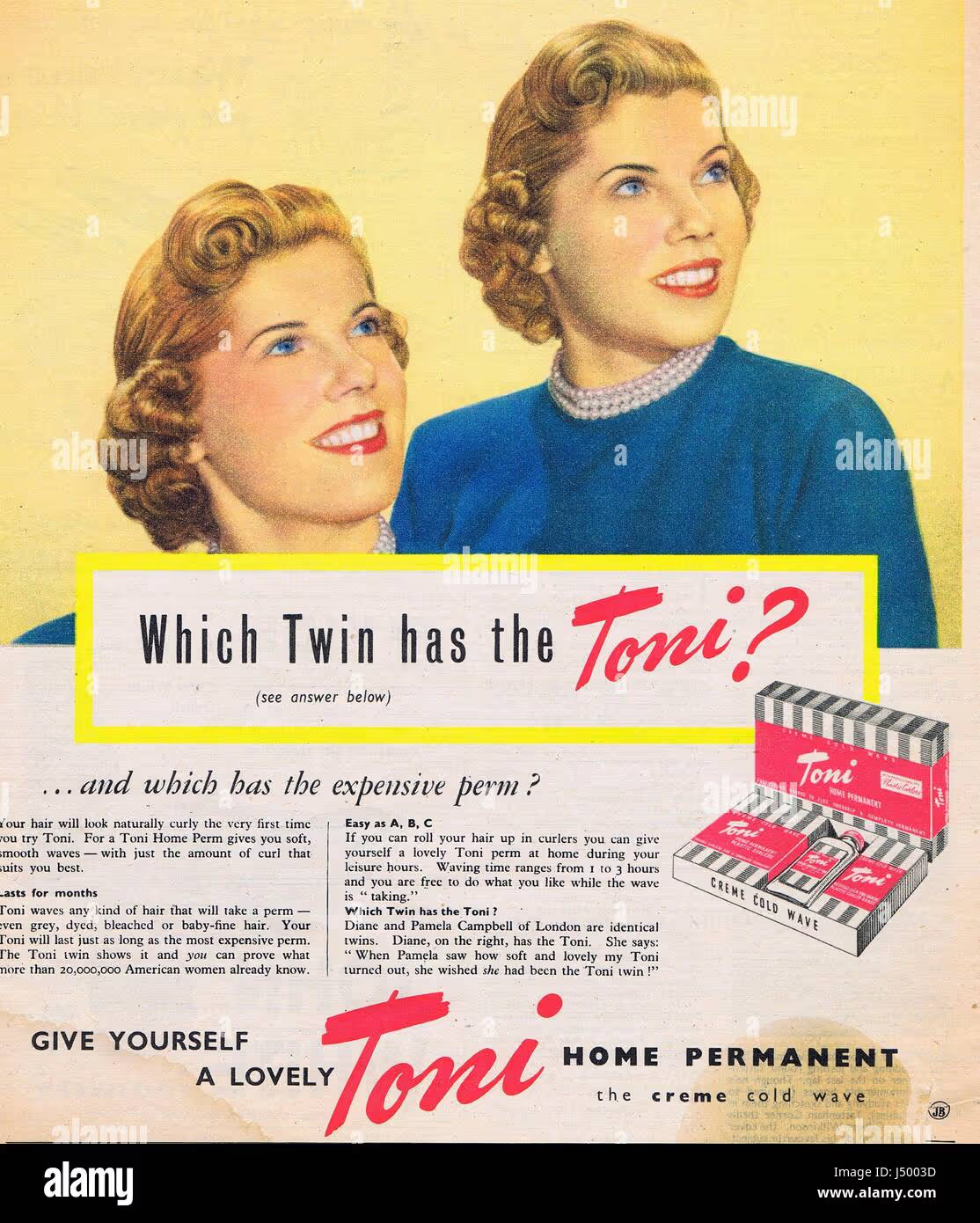
"Which twin has the Toni?"
Challenges trigger the ego. They turn passive scrolling into active solving. People want to prove they can figure it out.
Modern version: "Can you spot which version was written by AI?"
The mechanism is identical. You're not asking someone to read. You're asking them to participate. Participation creates investment. Investment creates attention.
5. Dramatize the Moment
"They laughed when I sat down at the piano…"
This isn't about the piano. It's about redemption. People click to watch the underdog win. They always will.
This technique works because it taps into narrative structure. Setup, tension, promised resolution. Your brain is wired to complete stories. An incomplete story creates cognitive dissonance that demands resolution.
AI can mimic the structure. But it struggles with authentic emotional stakes because it doesn't feel anything.
Why AI Struggles Here
AI optimizes for patterns it's seen before. It generates variations on existing templates. That's useful for certain tasks.
But Schwartz's techniques work because they exploit fundamental human psychology.
They're not templates. They're principles.
The difference matters.
A template tells you what to say. A principle tells you why it works. When you understand why something works, you can adapt it to any context. When you only know the template, you're stuck repeating what's already been done.
The Architectural Insight
Here's what I think is really happening: Schwartz's techniques endure because they're architectural, not tactical.
They don't depend on platform mechanics. They don't rely on algorithm quirks. They work because they align with how human attention actually functions.
Most marketing advice focuses on surface-level execution. Which platform. Which format. Which posting schedule. That stuff matters, but it's downstream.
Upstream is understanding how attention works. How credibility forms. How curiosity triggers. How tension resolves.
Get the architecture right and the tactics become easier. Get the architecture wrong and no amount of tactical optimization will save you.
What This Means for You
If you're writing headlines, test these five techniques against your current approach. Not because they're old. Because they work.
Measure your claims with specific numbers. State paradoxes that create tension. Remove the limitations your audience fears most. Turn passive reading into active challenges. Dramatize moments that promise emotional payoff.
Track the results. I think you'll find that understanding fundamental psychology produces better outcomes than following the latest template.
And if you're using AI to write headlines, use it as a starting point. Then apply these principles manually. The hybrid approach consistently outperforms pure AI or pure human work.
Because the goal isn't to be clever. The goal is to be clear about what matters to the person reading.
That's what Schwartz understood in 1966. That's what will still work in 2026.
Stay in Rhythm
Subscribe for insights that resonate • from strategic leadership to AI-fueled growth. The kind of content that makes your work thrum.
More from Thrum
Additional pieces exploring adjacent ideas