

JetBrains AI for Teams: Unified Governance for Enterprise AI Tools

JetBrains Launches Enterprise AI Layer to Unify Developer Tooling, Governance, and Costs
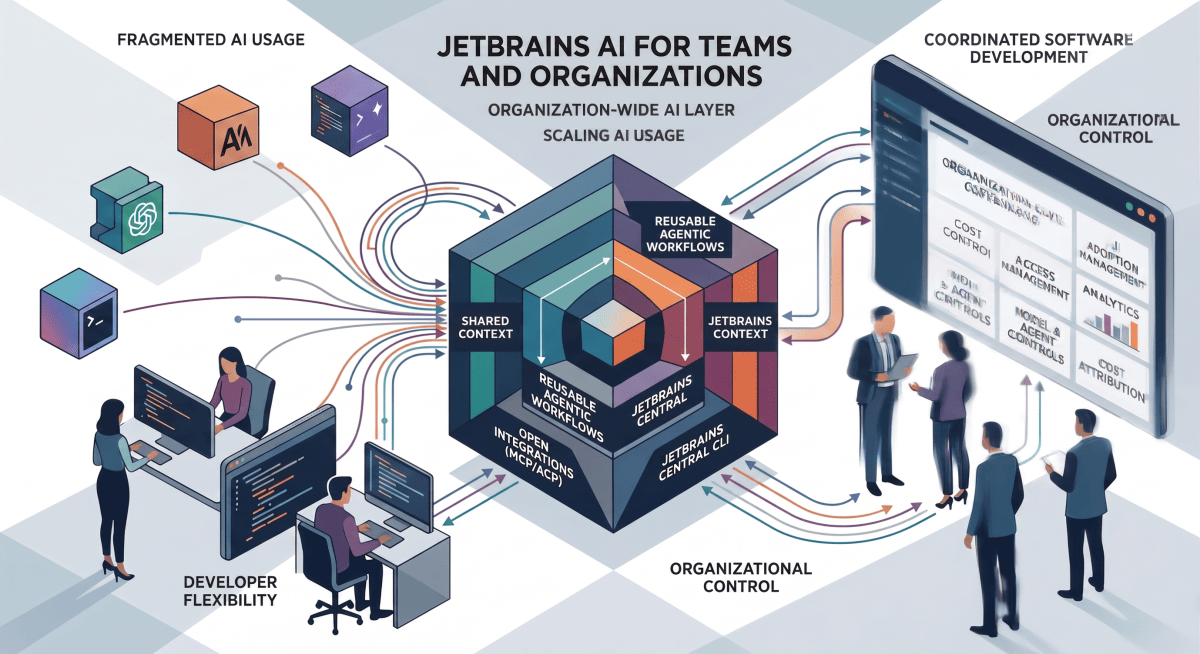
AI tool sprawl inside engineering teams is a real problem — developers using different models, different interfaces, and no shared oversight. JetBrains is addressing it head-on with the launch of JetBrains AI for Teams and Organizations, a company-wide AI infrastructure layer set to roll out to business customers in July and August 2026.
What It Does
The core idea is straightforward: developers keep using the AI tools they already prefer — including Claude Code or Gemini CLI — while the company gains a centralized layer for governance, shared context, and cost management. JetBrains describes this as the move from "fragmented AI usage to coordinated software development."
Four components make up the initial release:
- Team Automations and Cloud Agents — autonomously run AI agents for long-running tasks triggered by repository events or schedules, with full team visibility
- JetBrains Context — equips AI agents with deep repository knowledge so they can navigate complex codebases faster
- JetBrains Central — centralized management console for AI tools across the organization
- JetBrains Central CLI — command-line access to the same management layer
Open Architecture
JetBrains is building toward an open system — no lock-in to a single model, interface, or workflow. External tools connect via the Model Context Protocol (MCP); external agents connect via the Agent Client Protocol (ACP). The goal is a manufacturer-independent AI suite that works across vendors.
New Credit Model
Alongside the product launch, JetBrains is shifting to on-demand AI credits for business customers. Credits are valid for 12 months (up from one month), giving companies more flexibility to distribute AI investment across teams over time.
Read the full article on heise online
Stay in Rhythm
Subscribe for insights that resonate • from strategic leadership to AI-fueled growth. The kind of content that makes your work thrum.
More from Thrum
Additional pieces exploring adjacent ideas