

YouTube AI Labels Move to Visible Spots: What Marketers Must Know

YouTube Is Making AI Disclosure Labels Impossible to Miss — Here's What Marketers Need to Know
If you're producing AI-generated video content for YouTube, the platform just made transparency non-negotiable — and if you're buying ads there, you're about to get clearer signals about what your placements appear next to.
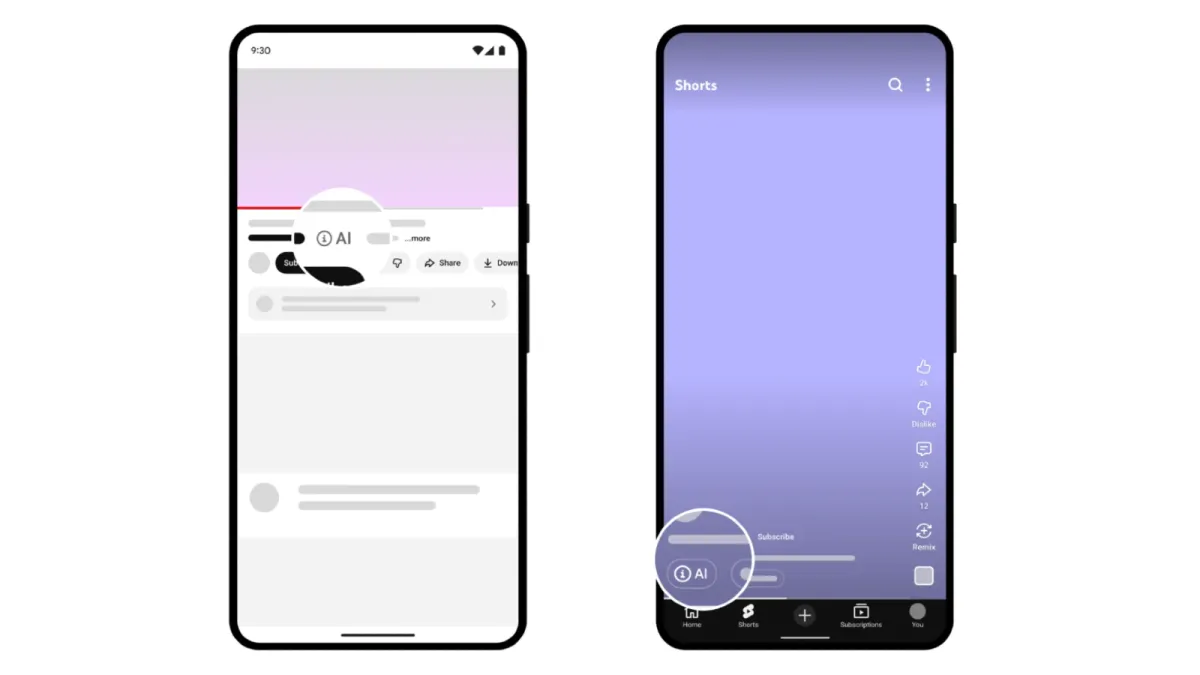
YouTube announced in May 2026 that it is relocating generative AI disclosure labels to significantly more prominent positions on both Shorts and long-form videos. For Shorts, the AI label now appears as a direct overlay on the video itself — visible before the viewer can scroll past. For long-form videos, it's now positioned directly below the player, above the expanded description.
What's Changing and Why It Matters
The platform has been building this framework for two years. Mandatory AI disclosure requirements took effect in May 2025. The May 2026 update tightens the visibility layer — because a label buried in an expanded description that most viewers never open isn't really a disclosure at all.
Key updates include:
- Label repositioning: Overlays on Shorts, prominent below-player placement on long-form content
- Expanded auto-detection: When creators skip the AI use questionnaire, YouTube's systems may apply a label automatically — using internal classifiers, C2PA metadata, and SynthID watermarks
- Non-disclosure penalties: Creators who consistently skip disclosure risk content removal or suspension from the YouTube Partner Program, which covers 3 million monetized channels globally
What Creators Must Disclose
The requirement applies to content where AI makes a real person appear to say something they didn't, alters footage of a real event, or generates a realistic scene that didn't occur. Minor edits, script generation, and non-realistic content (animation, fantasy) are explicitly excluded.
The Advertising Angle
For brands, this creates clearer sight lines into the nature of content adjacent to ad placements. YouTube states that labels themselves don't affect monetization eligibility or recommendations — but whether advertisers choose to exclude AI-labeled inventory at the campaign level is a market question, not a platform policy one.
The disclosure framework now has three layers: creator self-disclosure, platform auto-detection, and cryptographic provenance via C2PA and SynthID.
🔗 Read the full article on PPC Land
Stay in Rhythm
Subscribe for insights that resonate • from strategic leadership to AI-fueled growth. The kind of content that makes your work thrum.
More from Thrum
Additional pieces exploring adjacent ideas