

71% of Japanese Companies Using Generative AI in Creative Work Don’t Disclose It
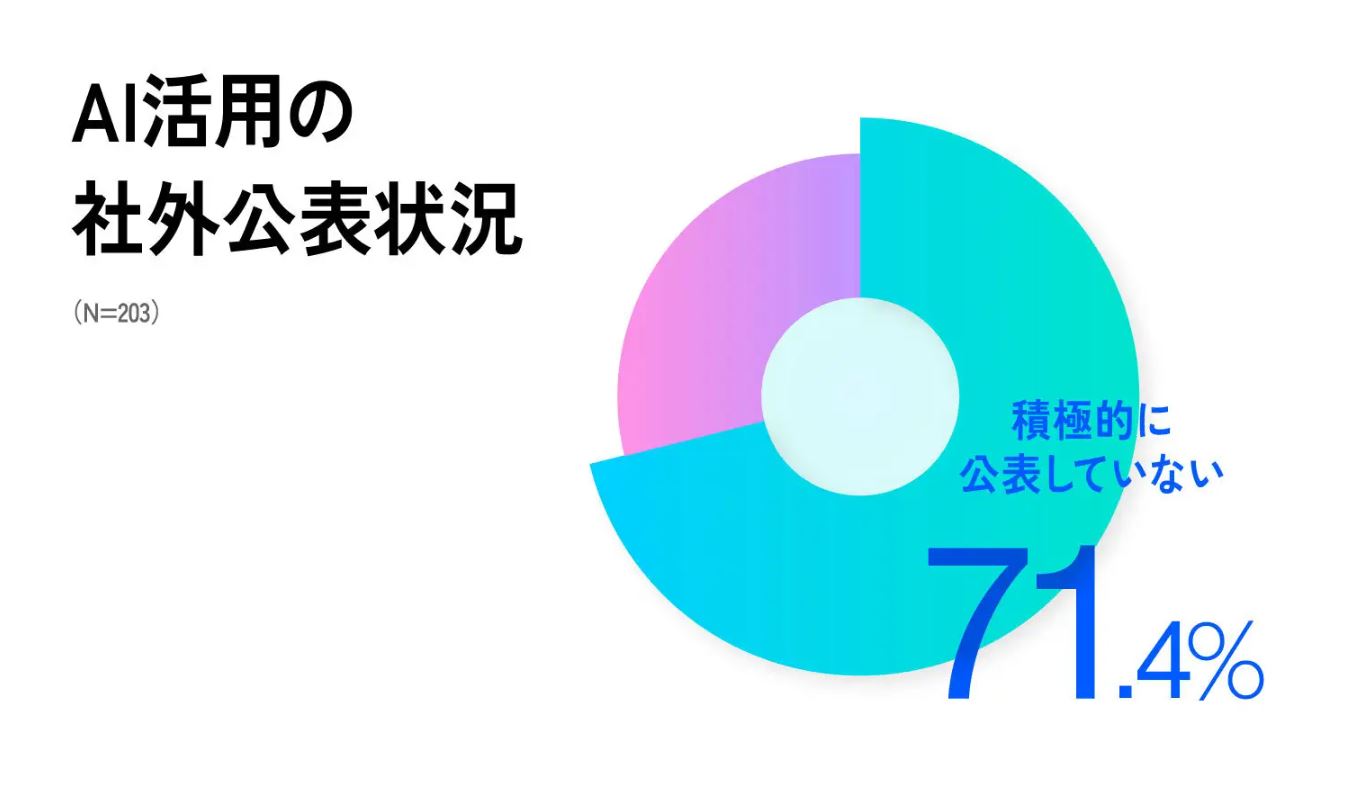

Generative AI has moved well beyond the testing phase in Japanese corporate creative work — but transparency hasn't kept pace with adoption. A survey of 400 creative and marketing professionals by Japanese creative company Amana finds that most companies using AI are staying quiet about it.
According to the survey, 59% of companies are already using generative AI, and 61.75% say AI is actively influencing internal creative decision-making. Despite this, 71.4% of companies using AI do not actively disclose the fact to clients or the public.
Key Takeaways
- Adoption is real and deep. AI has moved beyond production support into shaping creative decisions — not just how work gets made, but what work gets made.
- Copyright and IP are the top concern. 32.5% of respondents cited copyright and intellectual property concerns as the primary challenge with AI use, followed by a lack of clear evaluation standards (24%) and inconsistent output quality (21.5%).
- Governance is lagging. 43.5% of respondents said their organization either has no AI usage guidelines in place or is unsure whether such guidelines exist — a significant gap given how widespread use already is.
- Non-disclosure is partly driven by consumer backlash. Given documented public backlash when companies are discovered using generative AI, the reluctance to disclose is not surprising — though disclosure requirements like Steam’s are pushing the industry toward more transparency.
For business and marketing leaders, this data reflects a broader pattern: AI is already embedded in creative workflows globally, but the governance infrastructure — guidelines, disclosure standards, and quality evaluation criteria — is still catching up.
Read the full article on Automaton Media
Stay in Rhythm
Subscribe for insights that resonate • from strategic leadership to AI-fueled growth. The kind of content that makes your work thrum.
More from Thrum
Additional pieces exploring adjacent ideas